



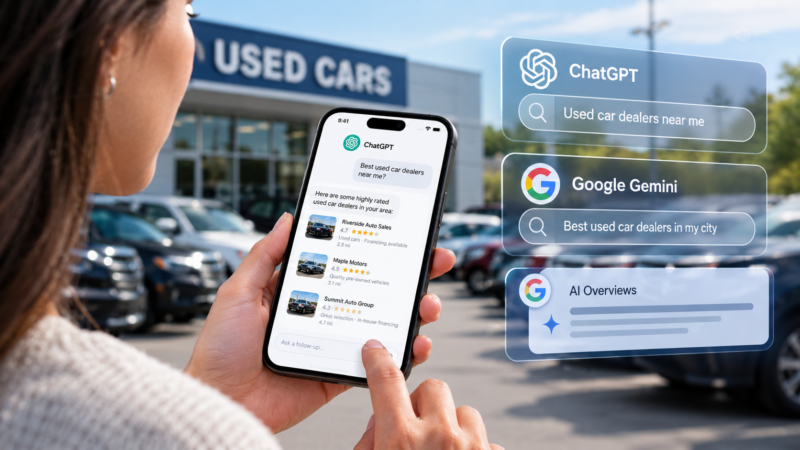
More car shoppers are turning to AI tools such as ChatGPT and Gemini to research vehicles and dealerships. For independent used-car dealers, that adds another consideration to online visibility: whether shoppers can find accurate, useful information about the dealership when they ask AI for recommendations.
Cox Automotive’s 2026 AI in Auto Retail Tracker found that 63% of in-market shoppers will definitely or probably use AI during their next vehicle purchase. AI tools were cited as a vehicle research source by 36% of shoppers, nearly matching the 38% who cited using automotive-specific websites. Yet only 29% of dealers said they had started adapting to AI-powered search.
Other research points to changes in how consumers navigate the web. Toyota’s marketing chief has reported a roughly 20% decline in traffic to Toyota.com and other top-of-funnel sites, which he linked to changing search behavior. Separately, a Pew Research Center analysis of U.S. browsing activity found that users clicked a traditional Google search result in 8% of visits when an AI summary appeared, compared with 15% of visits without one. The Pew findings cover general web searches, not automotive shoppers specifically.
AI-generated answers can draw on dealership websites, business listings, reviews and other online information. Dealers cannot control which sources an AI tool uses or guarantee that their store will be recommended, but they can take practical steps to keep their online presence accurate and useful.
Check what shoppers see. Search for your dealership by name in ChatGPT, Gemini and Google’s AI search features. Try local queries such as “used car dealers in [your city]” and questions about the vehicles or financing options you offer. Check whether the information is accurate and whether important details are missing.
Keep business information current. Make sure your dealership’s name, address, phone number and hours are consistent across your website, Google Business Profile and other important listings. Update inventory promptly and ensure vehicle descriptions, pricing and availability reflect what is actually on the lot.
Answer common customer questions. Provide clear information about financing options, credit requirements, trade-ins, vehicle history, warranties and the buying process. For independent dealers offering in-house financing or working with specific lenders, explain the actual terms and eligibility requirements without promising approval or outcomes.
Measure results. Track website visits, calls, form submissions and other leads, and ask customers how they found the dealership. These measures will not identify every AI-assisted shopping journey, but they can help dealers evaluate changes in traffic and lead quality over time.
AI is adding another way for consumers to research vehicles and local businesses, but it does not eliminate the need for traditional search visibility. Accurate listings, useful website content, current inventory and a credible online reputation remain practical priorities. Dealers can review their AI search presence periodically while continuing to monitor inventory, customer feedback and website performance as changes occur.