


Alabama dealer starts initiative to help homeless
From the December issue of UCD
By John Dismukes
This month, I sat down with Alabama dealer Dan Persinger of Persinger Automotive – a man whose influence stretches far beyond the lot. What began as a few sleeping bags and snacks handed out under local interstate bridges has grown into a weekly community movement feeding more than 100 homeless residents in Mobile. Dan and his wife have built a culture of compassion, consistency and quiet service, all while running one of the region’s most successful independent dealerships. Our conversation dives into the heart behind their mission, the lessons learned along the way, and the unexpected ways generosity has shaped their business.
John Dismukes (JD): Dan, thanks for sitting down with me. For readers who may not know you yet, how did you first get involved with the charitable outreach you’re doing, especially the work feeding the homeless?
Dan Persinger (DP): About 25 years ago, when we were just getting started in the car business, we found success quickly. I had small kids at the time, and I wanted to teach them there’s more to life than income – that there’s another side to prosperity. I felt fortunate and wanted them to see what it means to give.
So, I’d take my kids with me to go under interstate bridges and drop off sleeping bags, cookies, drinks. We jokingly called it “Under the Bridge.” We did that a few times a year.
Fast forward to about three years ago: my wife visited the Dream Center in Los Angeles, which helps people get off the streets. She came home and said, “I don’t have to go to L.A. or Vegas to feed the homeless; we need to do something here.”
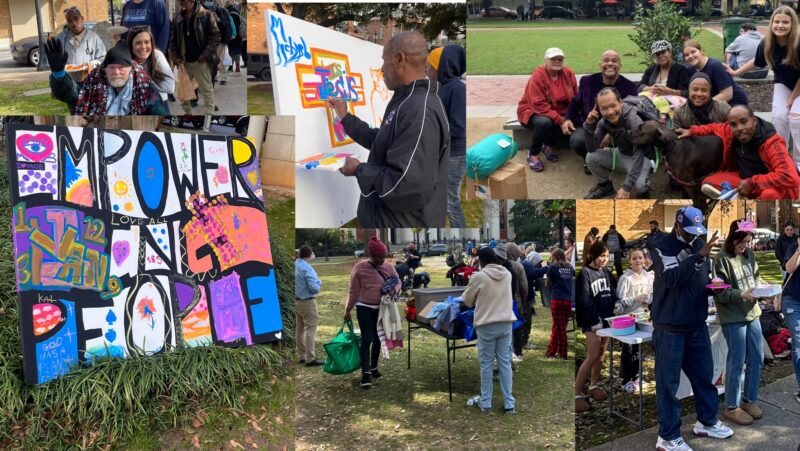
That first Sunday back, we went to Cathedral Square in downtown Mobile with 20 or 30 bags of chips, popsicles and drinks. We handed everything out. We did that every Sunday for a month or two.
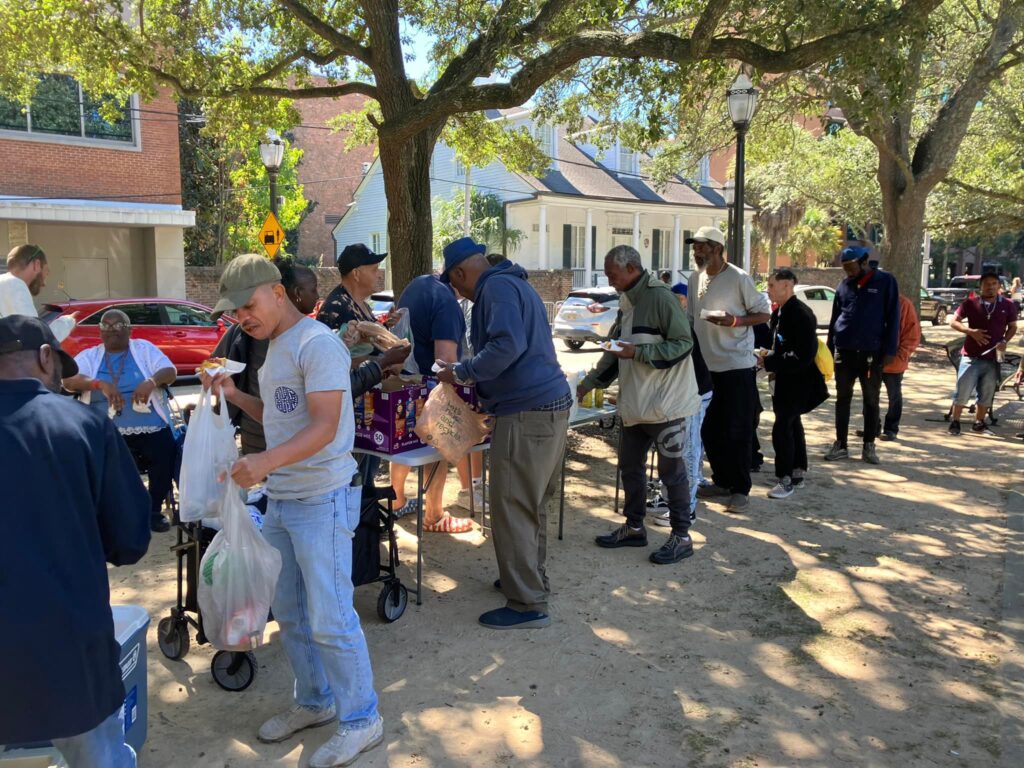
Then I thought, “Maybe I’ll cook some hot dogs.” So, I made 20 to 30. They were gone immediately. You see someone who hasn’t eaten in three days, and you realize how small your efforts feel. So, we expanded. Twenty dogs became 40, then 60, then 80. Now we cook 120 hot dogs every Sunday, plus pick up 15 pizzas from Pizza Hut, bring chips, cookies, candy, everything.
And now when we pull up, there are 100 to 150 people waiting. We haven’t missed a Sunday in around three years.
We’ve also added a “How Can I Help?” table. People donate clothes, even vendors and the auction, bring us stuff. A shoe store gives us returned shoes, so we hand out almost-new footwear to people whose feet are in terrible shape. Seeing that transformation is powerful.
JD: That’s an incredible progression. How has this work impacted the culture at Persinger Automotive?
DP: It really comes down to leading by example. I tell the team, “We can always do the right thing.” One good deed won’t make you, but one bad deed can break you in this business.
I never ask my employees to come, but almost all of them have shown up at least once or twice. It’s eye-opening for anyone to see someone their own age living on the street. It puts things into perspective.
JD: Has this community work affected your business, reputation-wise or operationally?
DP: It’s tough to measure, but I know positivity comes back around. Vendors know what we do; many donate clothes. And sometimes we see former customers or even former employees in the line. It reminds you how quickly life can change.
We even had a homeless gentleman washing our dealership windows for a while. We paid him $50 to $75. Eventually, he got incarcerated, so we had to hire a window-washing company again. But it shows how interconnected everything is.
JD: What’s the biggest lesson you’ve learned through all this?
DP: The biggest revelation has been understanding homelessness differently. People often assume it’s all addiction or bad choices. But many homeless individuals are just like you and me. They just have zero support system.
Most of us, at some point between ages 20 and 40, crashed on a parent’s couch, raided their fridge, borrowed their car, or stayed with family during hard times. The homeless don’t have that. No couch. No spare bedroom. No uncle to call. That’s scary.
It’s made me more grateful for the support I’ve had and more aware of how important it is to give others that chance.
JD: Have you seen individuals move out of homelessness because of your efforts?
DP: Yes – multiple times. People come to the “Help Table” for work boots or black shirts for a new job. We’ll buy what they need. Then a few weeks later, we see them again, but this time they’re not in line for food; they’re volunteering with us. That’s a great feeling.
JD: For dealers who read this and want to start a charitable effort, what advice would you give?
DP: Start simple and set the right expectation. Giving back doesn’t need to be complicated. If you were a high school wrestler and the wrestling team needs uniforms, buy some. No big announcement, no “look at me.” Just do it.
Pick something that matters to you — your local school, food bank, or a cause tied to your past. If everyone did something, we’d have a much better world.
JD: Have you had people misunderstand your intentions, thinking you’re doing this for recognition?
DP: Sometimes. But we rarely talk about it publicly. The only time we post is when we need something, like jackets, when it’s cold. My dad always told me, “If you give, you don’t raise your hand and blow trumpets.” Charity should make sense to you, not be a performance.
And yes, people come through the Sunday line who recognize me from our TV commercials. They’ll ask for a business card, and I tell them, “Not today. We don’t do business on Sundays.” That’s not the place for selling cars.
JD: As we get older, legacy becomes more important. How do you want your legacy – and Persinger Automotive’s – to be remembered?
DP: Honestly, we’ll just keep doing what we’re doing. But I also want people to know about my wife’s charity, OneMoreMoment.net. It started after our daughter attempted suicide. We had resources to help her, but many families don’t.
One More Moment is a parent support network that now spans almost every state and parts of Canada. It teaches parenting skills and helps families navigate crises. We’re the main sponsor, but now the charity has grants from Walmart, Sam’s Club, and others.
My wife spends much of her time meeting parents, connecting them to therapy, and guiding them. Because the dealership has been successful, we’ve been able to give her the freedom to pursue this mission full-time.
JD: With all that on your plate, how do you balance business and charity?
DP: We’ve been fortunate. The dealership performs well, so we’ve been able to structure things so that she leads the charity work day-to-day. I just try to support where I can, including our Sunday outreach.
JD: Last question. What’s one thing you want readers to take away?
DP: Action cures fear. If you see a problem, do something, even something small. Check on the elderly neighbor. Buy uniforms for a team. Hand someone a meal. Small acts create momentum.
You don’t need to fly across the country to make a difference. Look around — there’s need everywhere.