


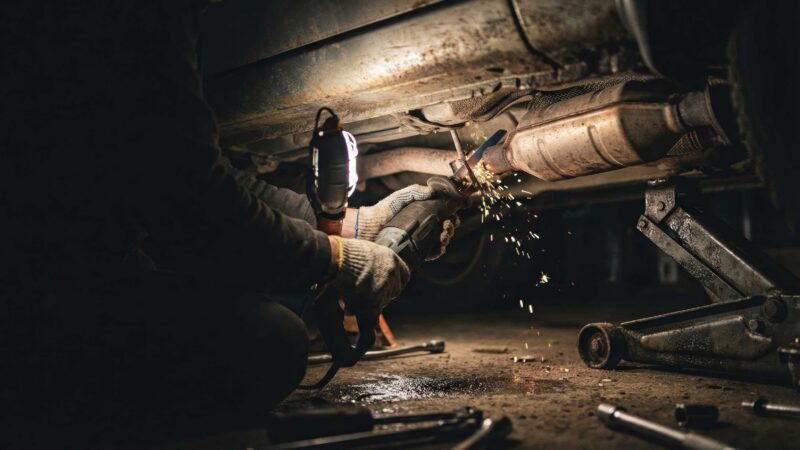
Catalytic converter theft is often framed as a consumer headache, but for independent dealers the exposure is different: the targets are sitting on the lot. Carfax reports more than 137,000 converters stolen last year, and the most-targeted models — the Ford F-150, Chevrolet Silverado, Ford Explorer, and Hyundai Tucson among them — are staples of the typical used inventory.
The vehicles are attractive for the same reasons they sell well. Pickups and SUVs sit higher off the ground, giving thieves quick access, and open-air lots that go unattended overnight present multiple units at once. One dealership reported losing 16 converters to two people in under an hour.
The financial hit also lands differently than it does for a retail owner. A stolen converter takes a unit off the line until it’s repaired, and a replacement can run upward of $2,000 before related exhaust damage — reconditioning cost that comes straight out of already-thin used-vehicle margins.
On prevention, dealers and security vendors report a range of approaches. Some have converters marked with high-temperature paint or etching, which makes the parts harder to resell and less attractive to recyclers. Others point to vehicle placement that keeps converters harder to reach, fencing and motion sensors, and monitored camera systems with audio deterrents. For smaller lots, vendors note the cost trade-off between overnight guard patrols and camera-based monitoring.
With rhodium and related metals holding high value, the conditions driving the thefts show little sign of easing.