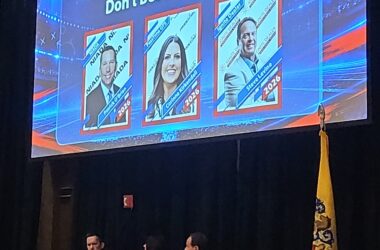


Nearly 150 independent auto dealers and industry members are in Washington, D.C., to speak with legislators on the state of the industry during the 2025 NIADA Policy Conference.
This year’s Policy Conference starts Monday at the Omni Shoreham Hotel.
Dealers will hold nearly 100 meetings with members of Congress and their staff, discussing issues important to the industry Tuesday during the Day on the Hill.
Here are some of the top events on Monday and Tuesday.
Panels, FTC presentation start Policy Conference
A State of the Industry panel, featuring members of several auto and finance associations, will lead off the NIADA Policy Conference’s general session.

NIADA Director of Government Relations and Compliance Patrick O’Brien will lead the panel discussion at 1:15 p.m., covering the current status of the Consumer Financial Protection Bureau, regulation of auto financing, right to repair legislation, auto auction industry policies and the impact of tariffs on dealers.
A second panel discussion will feature several state association members sharing their experience of working with state lawmakers and agencies on issues facing the used vehicle industry.
Helen Clark, Assistant Director in the Division of Financial Practices at the Federal Trade Commission, will give an update on the agency’s activity. Clark supervises investigations and enforcement matters covering a broad range of consumer protection issues at the agency.
Harshbarger to speak at PAC Dinner
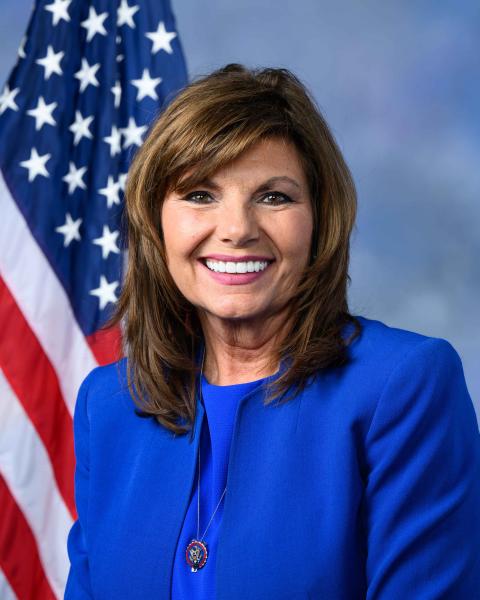
Rising Republican Tennessee Congresswoman Diana Harshbarger will address dealers and industry members on the current legislative environment in Washington, D.C. during the PAC Dinner on Monday at the NIADA Policy Conference.
Harshbarger, who represents the 1st Tennessee district, which includes Bristol and East Tennessee, is in her third term in Washington. A pharmacist by trade, Harshbarger ran her own small business before joining Congress. She serves on the House Committee on Energy and Commerce, along with subcommittees on energy, health and commerce, manufacturing and trade.
Reception on Capitol Hill
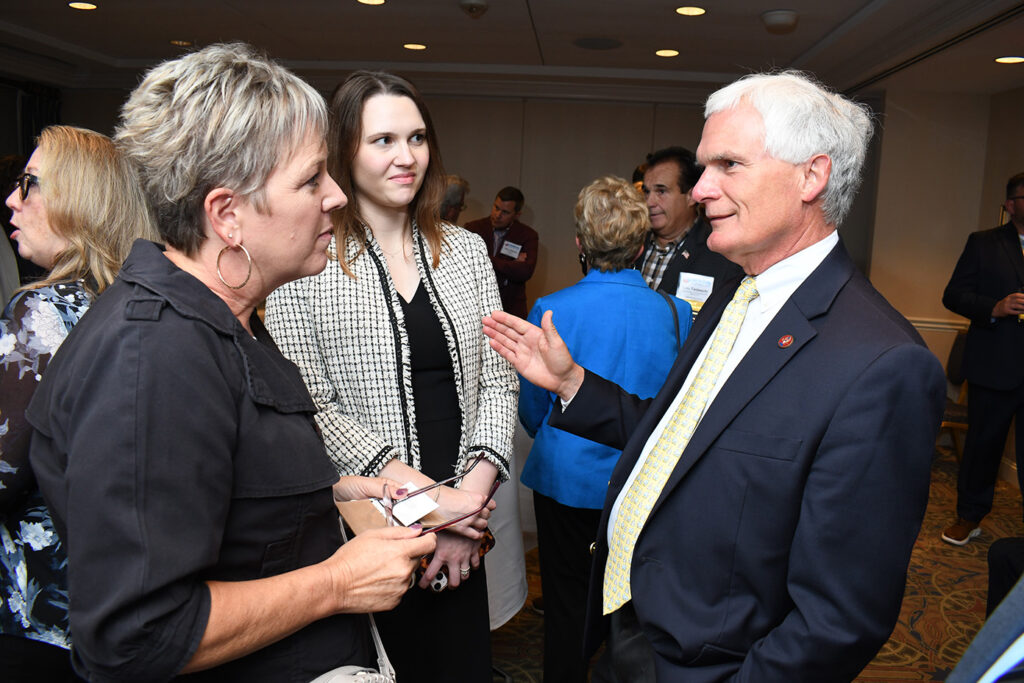
Following the Day on the Hill meetings on Tuesday, a reception will be held with members of Congress in the Budget Committee Room in the U.S. House of Representatives’ Cannon Office Building. This reception will provide one last chance to discuss issues with policymakers and recap the Day on the Hill. More than a dozen lawmakers have committed to attending the reception.
Issues on the table
During the Day on the Hill on Sept. 16, dealers will be discussing important issues facing the used vehicle industry.
The policies being presented during this year’s Policy Conference are:
The REPAIR Act (H.R. 1566 and S. 1379)

The REPAIR Act was reintroduced in the House of Representatives in February 2025 and a companion bill was introduced in the Senate in April 2025. The bipartisan bills are designed to empower consumers and promote competition in the automotive repair industry by safeguarding vehicle owners’ access to essential repair and maintenance information, ensuring independent repair shops, parts manufacturers and aftermarket service providers can continue to offer affordable and high-quality services. The bills prohibit OEMs from using technological or legal barriers that prevent vehicle owners or their designees from accessing vehicle-generated data and critical repair information.
Recent polling suggests more than 83 percent of Americans support a national right-to-repair law. The bill would increase competition for OEMs and greatly reduce the costs of labor and parts that consumers pay to maintain or repair their vehicles.
The PART Act (S. 2238)
The “Preventing Auto Recycling Theft Act” (PART Act) would assist law enforcement in combatting catalytic converter theft by marking catalytic converters and creating a more transparent market that disrupts this pernicious black-market activity.
Catalytic converters are prime targets for thieves and are being stolen at high rates due to their precious metals content, such as rhodium, platinum and palladium. Thieves can easily steal catalytic converters from unattended vehicles, and since catalytic converters are not readily traceable, there is a lucrative market for these stolen parts. These thefts are costing businesses and individual vehicle owners millions of dollars.
The PART Act includes a $7 million grant program through which certain entities can voluntarily stamp VINs, or other identifiers, onto the catalytic converters of vehicles at no cost to vehicle owners. Dealers are specifically eligible to utilize this grant program. The bill also requires new vehicles to have unique, traceable identifying numbers stamped on catalytic converters at the time of assembly.
TABS Act (H.R. 654) and the Rectifying UDAAP Act (H.R. 1652)
The “Taking Account of Bureaucrats’ Spending Act” (TABS Act) would rebrand the CFPB the “Consumer Financial Empowerment Agency,” establish it as an agency outside of the Federal Reserve System, and transition its funding structure to the congressional appropriations process. Subjecting the CFPB’s budget to the annual appropriations process will allow Congress to use “the power of the purse” to maintain important checks and balances on the CFPB’s day-to-day operations, ensuring fairness in its marketplace supervision, its rulemaking efforts, and its use of non-binding policy guidance, which in the past has factored into its enforcement activities.
The “Rectifying Undefined Descriptions of Abusive Acts and Practices Act” (Rectifying UDAAP Act) would amend the Consumer Financial Protection Act to establish and enforce standards related to unfair, deceptive, or abusive acts or practices under the CFPB’s authorities. Since the CFPB opened its doors, regulated institutions have lacked a clear and consistent definition of the term “abusive” and have received limited and oftentimes murky guidance on what constitutes a UDAAP violation. Clear and unambiguous definitions of what constitutes a UDAAP violation will bring much-needed clarity to the marketplace.